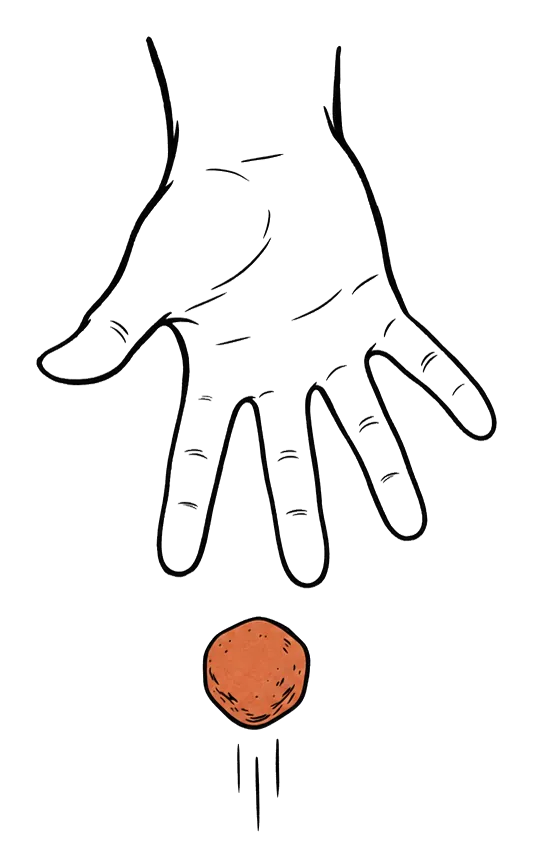
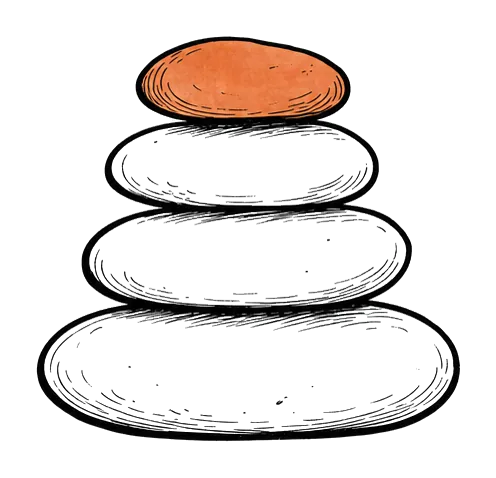
Two years together — most of them quietly miserable. When she left, I wiped her out: her number, her photos, every text, gone in a week — sure that erasing her would finally set the weight down. But this one message, I could never make myself delete. I just kept playing it at 2am, all through the lockdown.
Start at the beginning ↓We were together two years. From the outside, a normal couple. Inside, I was quietly miserable for most of it — and too proud to call it that. So when she finally left, in the fall of 2019, I did the one decisive thing I knew how to do: I erased her. Her number, her photos, every text — gone inside a week.
I told myself that was strength. A clean break — no shrine, no loose ends. I was proud of how fast I could wipe a person out of my life. Because I thought she was the weight. Delete her, set down the weight. That was the whole plan. And it worked on everything but one thing — there was a voicemail I could never make myself delete.
It got worse. Not a little — a lot. I'd wiped her out of my whole life, and instead of floating up, I dropped.
Erasing her didn't take the feeling with it. It just took the lid off. The anger came up first — two years of it, all the things I never said out loud. And right behind the anger, something quieter I hadn't let myself feel in a long time and couldn't name yet: how completely alone I was.
And the one piece of her I'd kept, I couldn't leave alone. Some nights I'd lie in the dark and play that voicemail, just to hear her voice. I told myself I didn't know why. I knew exactly why. I was still waiting for it to mean something.
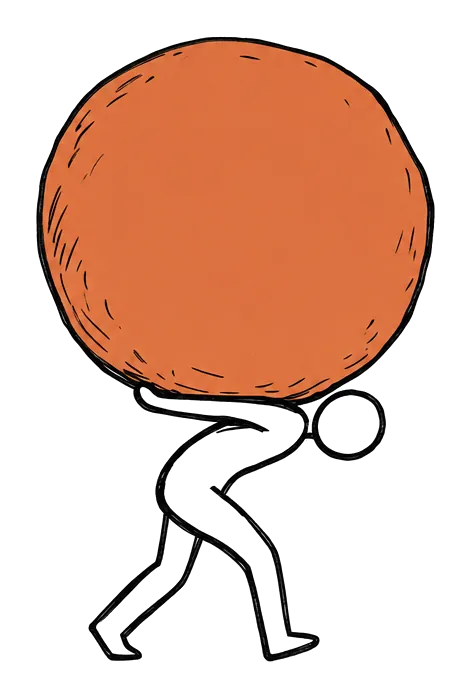
I thought she was the weight. So I wiped her from my life — and the weight got heavier. I'd erased everything but the one thing actually crushing me.
Zane
Then the crash. I'd wiped her number, every photo, every text — and my own head played them all back anyway, in high definition, at 3am. I started calling it fifty shades of nostalgia.
The good days got brighter every time I remembered them. The bad days went blurry. I was building a whole future out of a past that was never that good — the trips, the house, the version of us that only ever lived in the parts I let myself keep.
And the doubt crept in. Maybe I'd been too hard on her. Maybe she was a good person and it was just bad timing. I held onto that one for months. Good person, bad timing. It let me keep the door cracked.
Here's what took me years to learn. When it's your person, the timing doesn't matter. You make it work in the wrong year, the wrong city, the wrong season of your whole life — because you're both actually trying. It's only ever "bad timing" when one of you already has a foot out the door. "Bad timing" was just the kindest word I had for "this was never going to work, and we both knew it."
So I did what you do. I went looking for a patch — anything to press over the hole:
And then the world shut down. Lockdown. No bar, no crowd, no next person, no noise left to pour into the quiet. Every patch got peeled off at once — and there I was with the one thing I'd been running from since she left. A room with nobody in it but me.
"How can you wonder your travels do you no good, when you carry yourself around with you? You are saddled with the very thing that drove you away."
Seneca · a screenshot I couldn't scroll past
That line stopped me cold. I read it about ten times. And for once, I didn't argue with it.
Because alone in that apartment, the math finally caught up with me. If she was the reason I felt this empty, the feeling should have left when she did. It didn't. It got louder. I kept changing the room and wondering why every room felt the same. It was me. I was the room.
So I followed it back, and it went a lot further than her. I'd been lonely with her too — lying right next to her, lonely. I'd been lonely before her. I was lonely now. She was never the source. She was just the last place I'd set down a feeling I'd been carrying my whole life. The problem was never my connection to her. It was my connection to me.
And the message itself never even gave me the fight I wanted. No screaming. No villain I could hate clean. Just her — half-sorry, and not even sure of it. I think I'm sorry. I don't know. If we'd met some other time… and then nothing. Never mind. I replayed it a thousand times, waiting for it to add up to something. It never did. Because the thing I was digging for in that message — the apology that finally landed, the proof, the closure — was never in there. It was never in her at all.
I wasn't lonely because she left. I was lonely the whole time she was here — I'd just finally run out of someone to blame for it.
Zane
Once I saw that, I saw what those two years had actually done to me. I'd walked out of that relationship fluent in a language I never wanted to learn.
The cruelest voice in my life wasn't hers. It was mine. It had just learned every word from being made small, day after day, until I could do it to myself with nobody else in the room. I had a PhD in bad self-talk — I could take myself apart before I got out of bed. That was the wound none of the erasing ever touched. The voice she trained into me was never in any message. It was me.
And before I could rebuild any of it, I had to do the thing I'd dodged the whole time: name what I'd actually turned into. Not what she did — what I became. When I finally stood still and looked, there were two of them staring back:
I didn't have tidy names for them yet. I just knew, finally, that they were me. And the strangest thing happened the second I could see them clear — they started to lose their grip. You cannot set down a thing you won't even look at.
So that's what I rebuilt, alone, in the quietest year of my life. Not her — I'd already erased her, and it fixed nothing. The voice. I learned to catch it. To talk to myself like someone I was responsible for, instead of someone I was punishing.
Forgiving her turned out to be part of taking myself back, not a gift I handed her. It didn't make what happened okay — it didn't. It just meant I stopped using her as the reason to keep talking to myself like that. Forgiveness was me getting off my own hook. The door between us stayed shut, and that's not bitterness — that's wisdom. Faith was the floor under all of it: I handed the whole ledger to God and quit appointing myself the one who had to settle the account. That part stayed quiet, between Him and me. I'm not here to preach it at you.
I won't tell you I'm finished. The old voice still knocks on some mornings. The difference now is I know it's lying, and I don't hand it the mic. The room is finally quiet — and for the first time, the voice in it is one I'd let a friend hear.
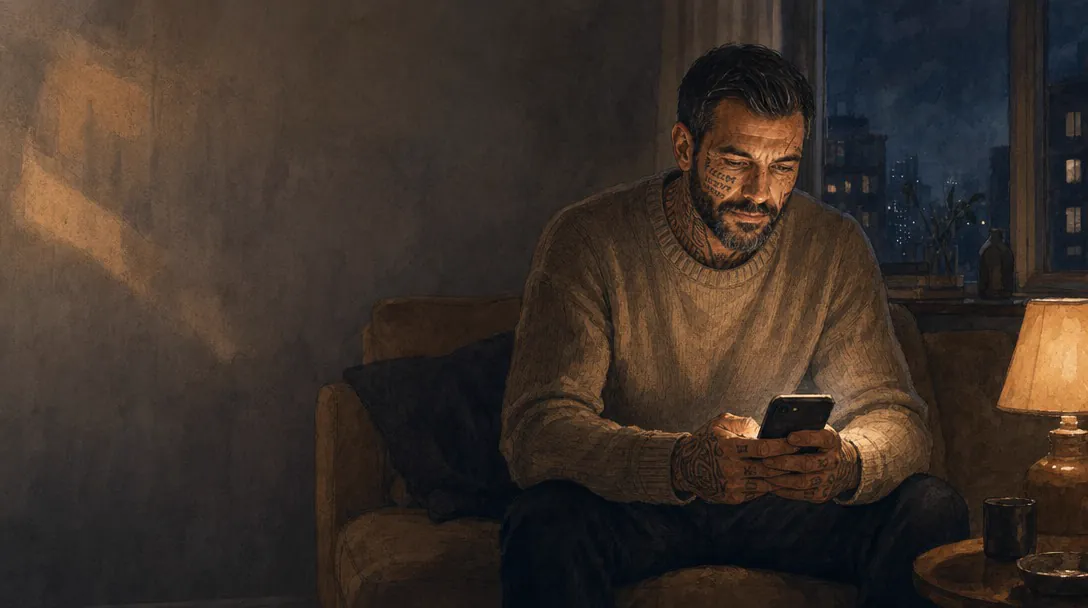
Forgiveness was never a gift I gave her.
It was the weight I finally set down for myself.
And the cruelest voice you live with might not even be theirs — it's the one you picked up from them, and kept using long after they were gone. You're not broken for still hearing it. You're being rebuilt, and scar tissue grows back stronger than skin that was never cut. That's not a metaphor. That's you.
You don't get healed back into who you were. You climb — lighter every step — into who you couldn't be before.

I'm not here to fix you. I'm here because I found out the hard way that the problem was never the person who left — it was the patterns they left running in me. And the thing that finally set me free wasn't erasing her. It was being able to name what I'd become.
It took me years to find my own names for it. Later, once I could talk about any of this, I started hearing my own story in other people's mouths — the same few quiet patterns, just wearing different faces:
So I mapped them, and built the thing I wish I'd had: a way to find the one you're carrying in two minutes, instead of the two years it cost me.
That's the quiz. Naming the weight — seeing which one you're carrying, and where you want to go instead — is the first real piece of setting it down. In two minutes you'll see:
Then we walk it together, one morning at a time.